

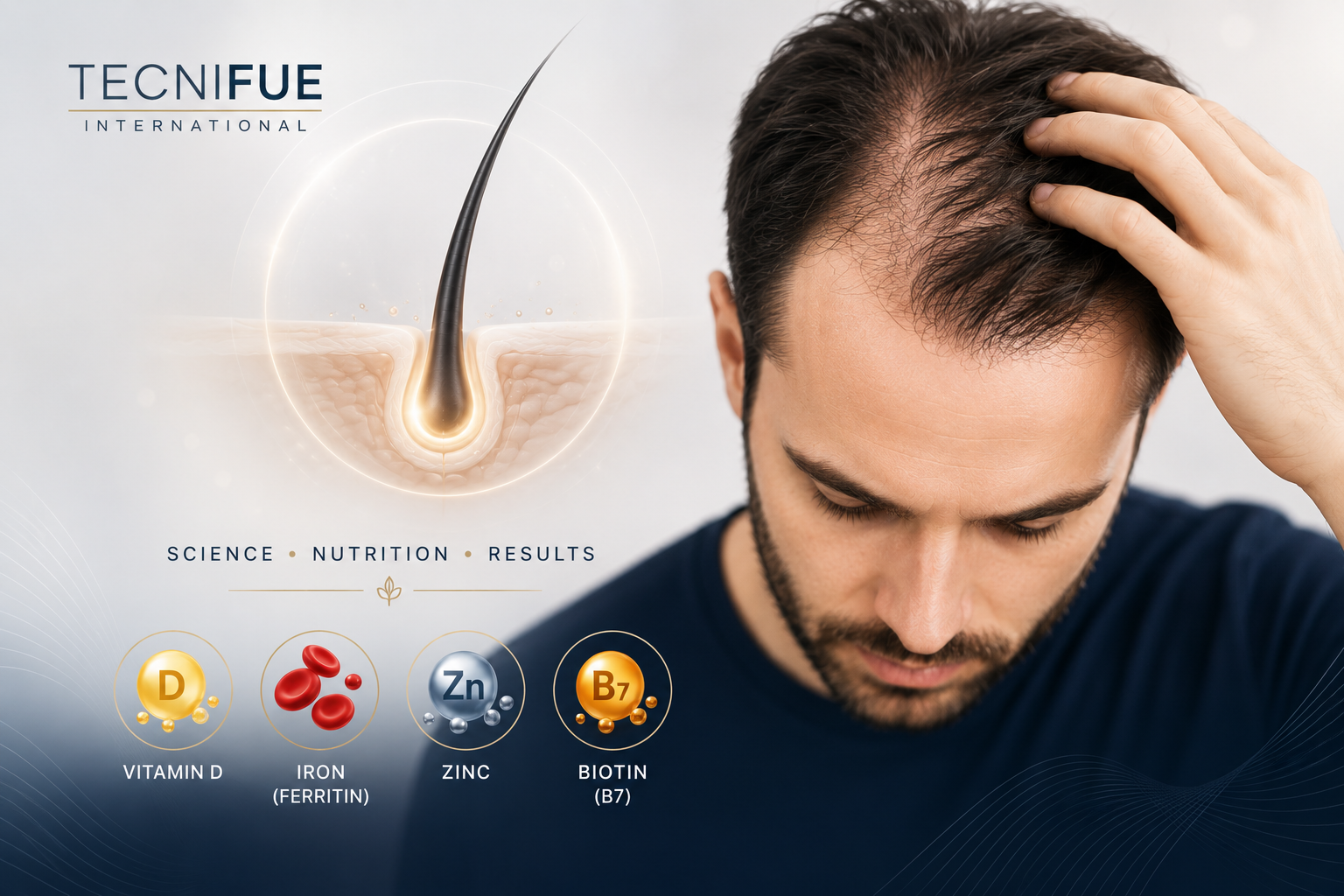

Quick Answer: The most effective hair falling out vitamins are vitamin D, iron (measured as ferritin), zinc, and biotin, but only if a blood test confirms you are actually deficient. Deficiency-related shedding is usually reversible within 3-6 months of correcting the shortfall. If your levels are normal, extra supplements will not regrow hair, and overdosing vitamin A or selenium can make shedding worse.
Key Takeaways
- Vitamin D, iron/ferritin, zinc, and biotin are the deficiencies most consistently linked to excessive shedding.
- Supplements for hair fall only work when a verified deficiency exists; a blood test should come first.
- Expect 3-6 months before visible improvement, because of the hair growth cycle’s natural lag.
- Too much vitamin A or selenium can cause hair loss, not cure it.
- If shedding follows a receding pattern rather than diffuse thinning, the cause is likely genetic, and no vitamin will reverse it.
Can Vitamin Deficiency Really Cause Hair Loss?
Yes. Vitamin deficiency hair loss is well documented: follicles are among the fastest-dividing cells in the body, so they are the first to suffer when nutrients run low. A review published in the NIH’s PubMed Central library links low vitamin D, iron, and zinc to telogen effluvium, the diffuse shedding most people notice as “hair falling out everywhere.”
💡 What is telogen effluvium? A temporary condition where stress, illness, or nutrient deficiency pushes an unusually high share of follicles into the resting (telogen) phase, causing diffuse shedding 2-3 months later.
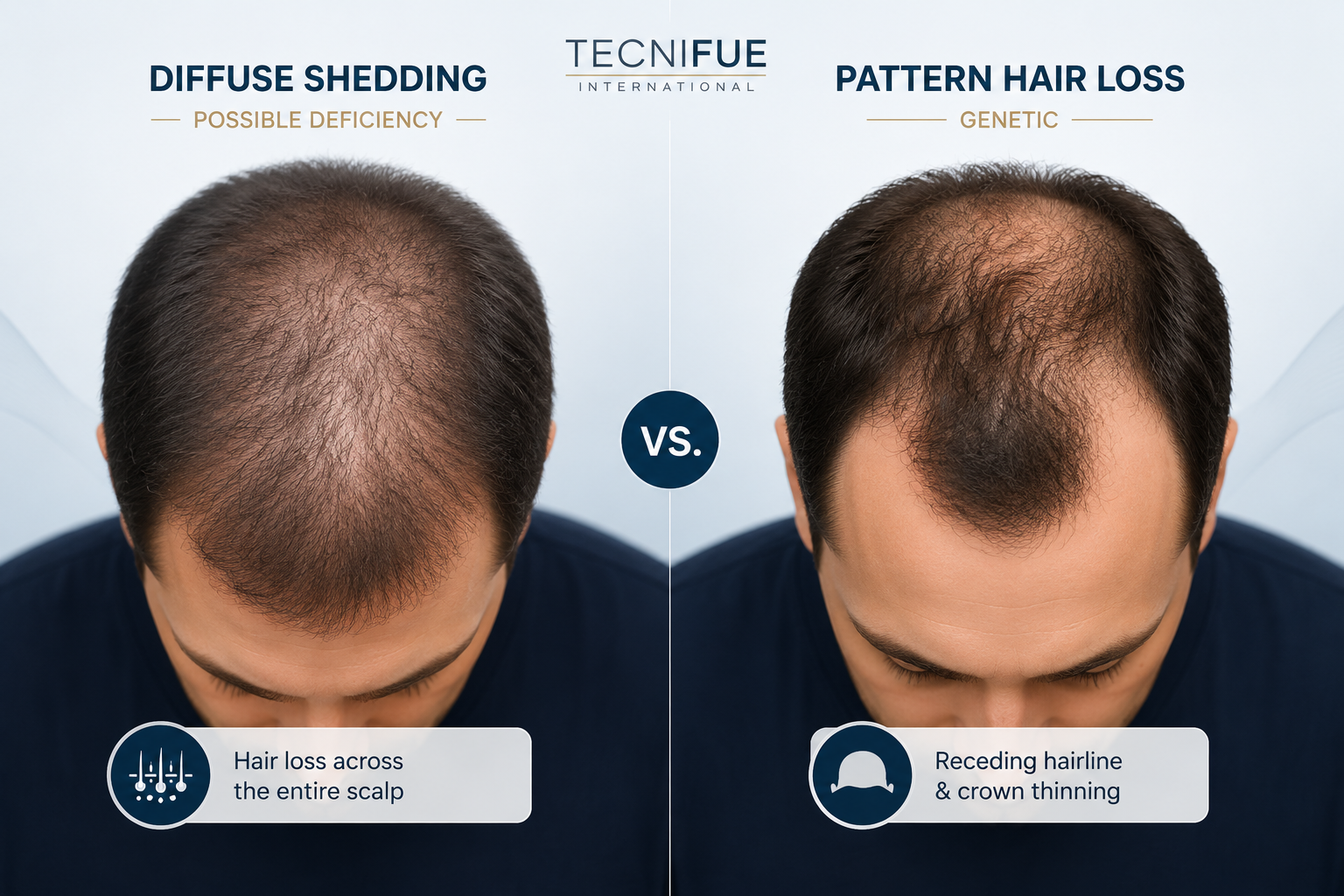
Deficiency shedding looks different from genetic loss. Deficiency-related loss is diffuse (all over the scalp) and often sudden. Genetic loss follows a pattern: receding temples or a thinning crown in men, a widening part in women.
The 7 Best Vitamins and Minerals for Hair Loss
Vitamins for hair thinning work by restoring what the follicle is missing, and each nutrient has a distinct deficiency signature. This table summarizes the nutrients for healthy hair growth that matter most:
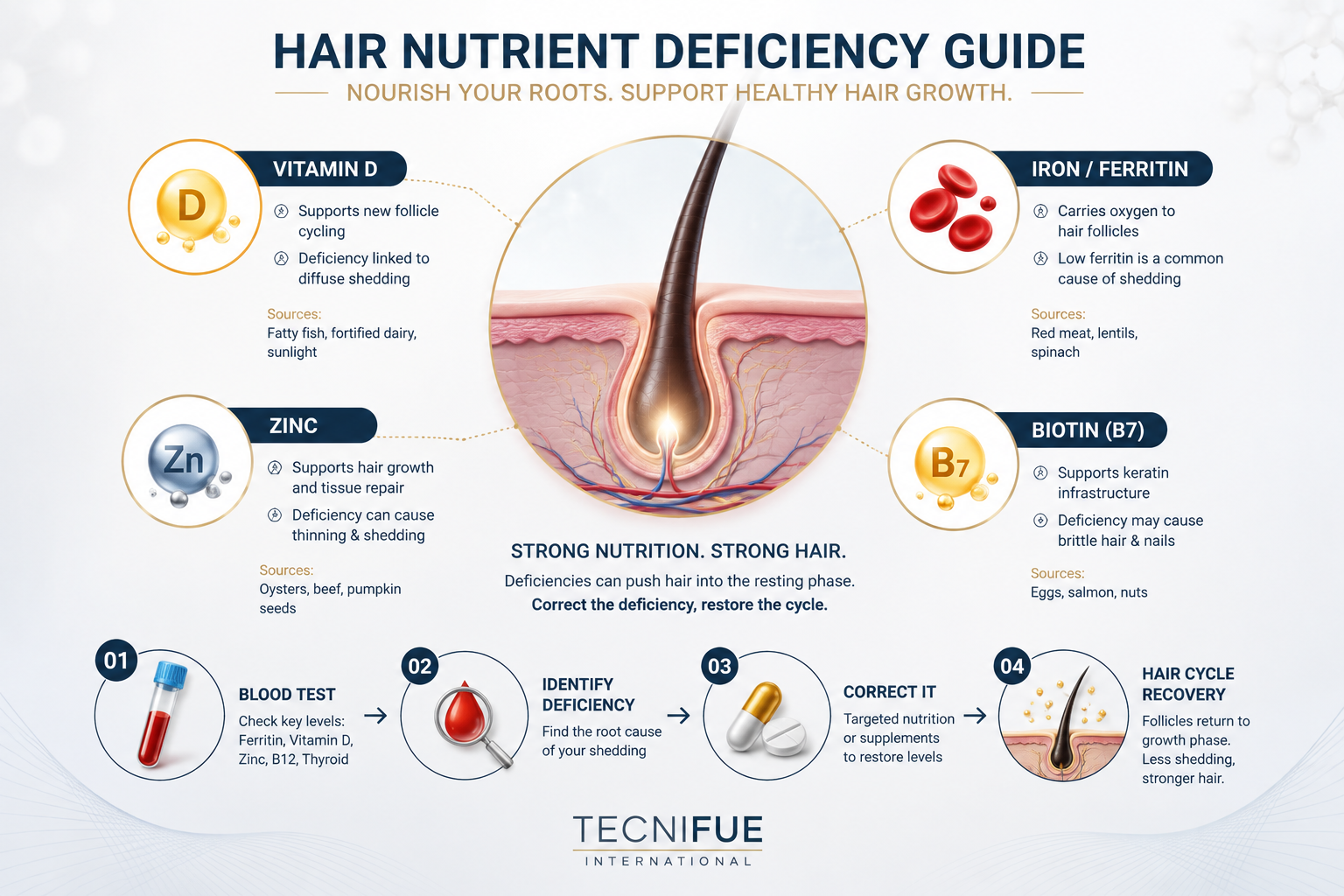
| Nutrient | Deficiency Symptom | Best Food Source |
|---|---|---|
| Biotin (B7) | Brittle hair and nails, thinning | Eggs, salmon, nuts |
| Vitamin D | Diffuse shedding, fatigue | Fatty fish, fortified dairy, sunlight |
| Iron/Ferritin | Shedding, pale skin, cold hands | Red meat, lentils, spinach |
| Zinc | Shedding, slow wound healing | Oysters, beef, pumpkin seeds |
| Vitamin C | Dry, splitting hair (aids iron absorption) | Citrus, peppers, kiwi |
| Vitamin E | Dull, weak strands, scalp oxidative stress | Almonds, sunflower seeds |
| Omega-3s | Dry scalp, lackluster hair | Salmon, sardines, walnuts |
Ask your physician about the amount that is right for you before starting any supplement, especially if you take prescription medication.
Two honest notes. Biotin for hair loss is heavily marketed, but it typically helps only the small group who are genuinely deficient, and excess biotin can distort thyroid and cardiac lab tests. Iron deficiency and hair shedding, on the other hand, is one of the most common and most fixable causes, especially in women. That is also why supplements for hair loss in females so often center on iron plus vitamin C, which boosts absorption. Collagen may support hair structure, but evidence is weaker than for the seven above.
How Do You Know Which Vitamin You’re Missing?
You can’t reliably tell from symptoms alone, so ask your doctor for bloodwork before buying vitamins to stop hair falling out. Hair loss vitamin deficiency symptoms overlap: fatigue points to low iron or vitamin D, brittle nails to biotin or zinc, and slow healing to zinc. A standard panel (ferritin, vitamin D, zinc, B12, thyroid) usually identifies the cause and prevents you from megadosing blindly.
How Long Until Hair Falling Out Vitamins Show Results?
Plan on 3-6 months. Hair grows roughly 1 cm per month, and follicles pushed into the resting phase need about 90 days to re-enter growth. Early signs the best vitamins for hair regrowth are working: less hair in the drain by month 2-3, then fine “baby hairs” along the hairline by month 4.
Risks of Overdosing on Hair Supplements
More is not better. Excess vitamin A and excess selenium are both known to trigger hair loss. Stacking multiple supplements for hair fall (a multivitamin plus a “hair gummy” plus biotin) can quietly push you past safe limits, so check combined doses and clear them with your prescribing physician if you take medication.
When Vitamins Aren’t Enough: Pattern Hair Loss
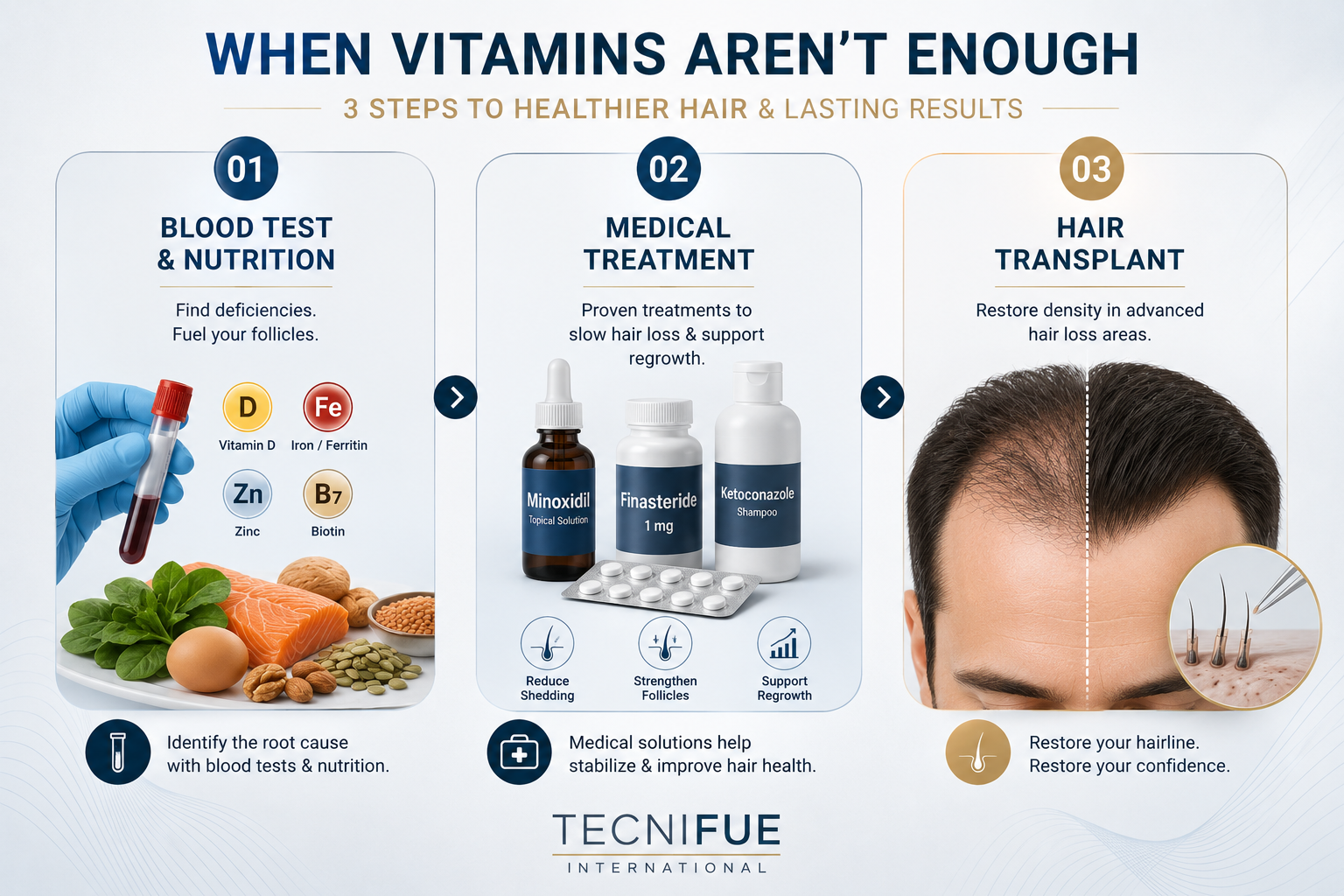
If your hairline is receding or your crown is thinning while blood tests are normal, the cause is androgenetic (genetic and hormonal), and even the best supplements for thinning hair will not restore those follicles. Medical options include minoxidil and finasteride; for advanced loss, a transplant may be considered to restore density in bald zones. These are medical decisions best made with a qualified physician who can assess your individual situation, including donor area health and overall suitability.
If you are considering a surgical route, verify that a certified surgeon (not only technicians) leads the procedure, ask for realistic expectations about recovery and results, and confirm that aftercare includes proper follow-up. Costs and timelines vary widely, so seek transparent, written information from any provider before making a decision.
FAQ: Vitamins and Hair Loss
What vitamin am I lacking if my hair is falling out?
The most likely culprits are vitamin D, iron (low ferritin), or zinc; biotin deficiency is possible but rare. Only a blood test can confirm which one applies to you.
Do biotin supplements really regrow hair?
Only if you are deficient, which few people are. For everyone else, biotin mainly strengthens nails and can interfere with lab tests at high doses.
Is it safe to take multiple hair vitamins together?
Usually yes at standard doses, but stacking products risks vitamin A and selenium overload, both of which can worsen shedding. Add up totals across all products first.
What are the “big 3” for thinning hair?
For genetic pattern loss, the established trio is minoxidil, finasteride, and ketoconazole shampoo, not vitamins. Vitamins help only when a deficiency is driving the shedding.
Can vitamins fix a receding hairline?
No. A receding hairline is androgenetic, not nutritional. Vitamins support overall hair health, but restoring a receded hairline requires medication to slow loss or a transplant to rebuild it.