

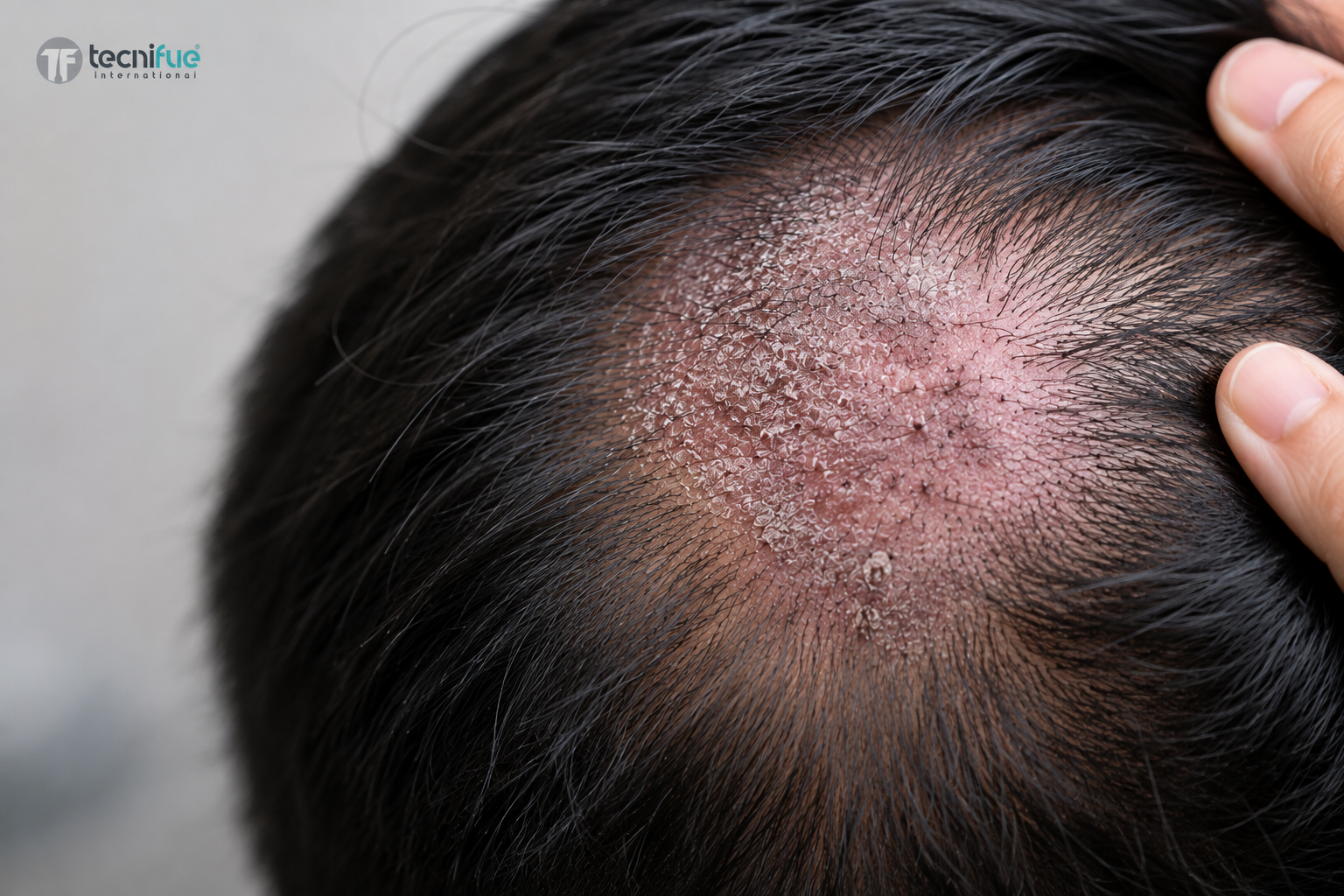

Quick Answer: Fungus on scalp, medically called tinea capitis or ringworm on scalp, is a contagious infection caused by dermatophyte fungi such as Trichophyton and Microsporum. It causes itching, scaly patches, and hair breakage, and typically requires oral antifungal medication plus an antifungal shampoo. Shampoo alone rarely cures it, and any active infection must be fully cleared before a hair transplant.
Key Takeaways
- Tinea capitis is a fungal infection, not dandruff. It produces defined scaly patches, broken hairs, and sometimes black dots at the follicle level, while dandruff causes diffuse flaking without hair loss.
- Topical products alone usually fail. Because the fungus lives inside the hair shaft, most cases need prescription oral antifungals (commonly griseofulvin or terbinafine) for 4 to 8 weeks.
- It spreads easily through direct contact, shared combs, hats, pillowcases, and infected pets, which is why household screening matters.
- Untreated fungus on scalp can cause permanent hair loss if inflammation (a kerion) scars the follicles.
- No reputable surgeon will transplant into an infected scalp. Active fungal infection on the scalp disqualifies you from surgery until it is treated and confirmed clear.
- Home remedies like apple cider vinegar do not cure tinea capitis. They may soothe symptoms but cannot reach fungus inside the hair shaft.
An itchy, flaking scalp is one of the most searched health complaints in the United States, and for good reason: the symptoms of a scalp fungal infection overlap with dandruff, psoriasis, and seborrheic dermatitis, yet the treatments are completely different. Get the diagnosis wrong and you can spend months on the wrong shampoo while the infection spreads and damages follicles.
This guide explains what fungus on the scalp actually is, how to tell it apart from look-alike conditions, which treatments work (and which popular home remedies do not), and one angle most articles skip entirely: what an active or recent scalp infection means if you are considering a hair transplant.
What Is Fungus on Scalp (Tinea Capitis)?
Fungus on Scalp, known medically as tinea capitis, is an infection of the scalp skin and hair shafts caused by mold-like fungi called dermatophytes. These organisms feed on keratin, the protein that makes up hair and the outer skin layer, which is why the infection weakens hair and makes it snap off at or near the surface.
Definition and How the Infection Develops
Tinea capitis develops when dermatophyte fungi, most often species of Trichophyton or Microsporum, invade the outer scalp layer and grow into the hair shaft itself. This is the key difference from surface conditions like dandruff: the organism is not just sitting on the skin, it is living inside the hair fiber.
Once established, the fungus spreads outward in a ring-like pattern (which is why the condition is commonly called ringworm on scalp, despite no worm being involved). The infected zone becomes scaly and inflamed, and hairs within it break easily.
Two broad patterns are seen clinically:
- Ectothrix infection: fungal spores coat the outside of the hair shaft, often causing gray, scaly patches.
- Endothrix infection: the fungus grows inside the shaft, producing the classic “black dot” pattern where hairs snap off at scalp level.
Who Is Most at Risk
Children between roughly 3 and 10 years old account for the majority of fungus on scalp (tinea capitis) cases, but adults are not immune. Adult cases tend to occur in people with weakened immunity, diabetes, close contact with infected children or animals, or frequent use of shared grooming tools.
Risk is higher for people who:
- Live in the same household as someone with ringworm (on the scalp or body)
- Handle cats, dogs, or farm animals, since Microsporum canis is a common animal-to-human culprit
- Share combs, clippers, hats, helmets, towels, or pillowcases
- Have prolonged scalp moisture from heavy sweating, tight headwear, or infrequent washing
- Have conditions or medications that suppress the immune system
Common Causes of Fungus on Scalp
A fungal infection on the scalp always starts with exposure to the organism, but whether that exposure becomes a full infection depends on scalp conditions and immunity. Three factors do most of the work.
Contact with Infected People, Animals or Objects
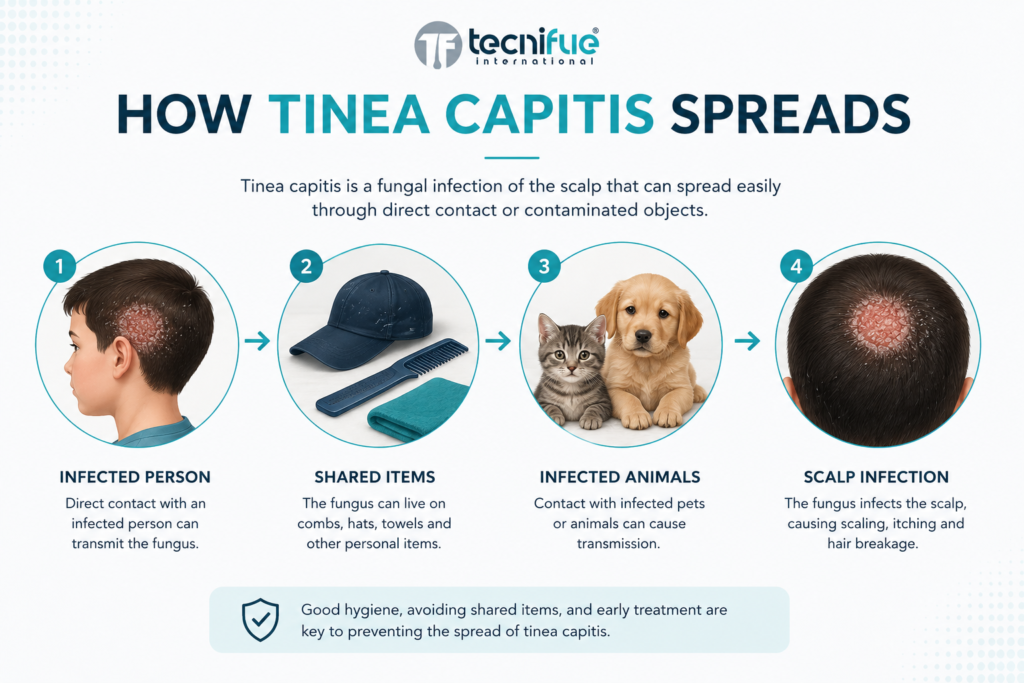
Direct and indirect contact is the number one route of transmission. Dermatophytes shed on skin flakes and broken hairs, and those fragments stay infectious on combs, barber clippers, hats, headrests, and bedding for weeks or even months.
The most common transmission scenarios are:
1. Person to person: hugging, wrestling, close-contact sports, or sharing a bed with someone infected
2. Animal to person: kittens and puppies are frequent carriers, often with only a subtle bald patch of their own
3. Object to person: shared grooming tools are a classic source, which is why barbershop hygiene genuinely matters
Excess Moisture, Sweat and Poor Hygiene
Fungi thrive in warm, damp environments, so a chronically sweaty or occluded scalp is fertile ground. Wearing tight caps or helmets for long hours, leaving hair wet under headwear, and going long stretches between washes all raise the odds that a stray spore takes hold.
Hygiene alone does not cause or prevent tinea capitis, and clean people get it too. But moisture management tilts the odds in your favor.
Weakened Immune System
A healthy immune system often clears small fungal exposures before they become visible infections; a compromised one does not. Adults with diabetes, those on long-term corticosteroids or chemotherapy, and people with HIV are more likely to develop fungus on scalp (tinea capitis) and more likely to have severe or recurrent disease. Persistent adult scalp fungus is sometimes the clue that prompts a broader health workup.
Signs and Symptoms to Watch For
Tinea capitis symptoms range from mild flaking that mimics dandruff to painful, boggy swellings that can permanently scar. Catching it early is the difference between a straightforward course of medication and lasting hair loss.
Itching, Redness and Flaking
The earliest signs are usually a persistently itchy scalp, localized redness, and flaking concentrated in one area rather than spread across the whole head. An itchy scalp fungus patch tends to feel different from ordinary dryness: the itch is focal, stubborn, and often worsens with sweating.
Scaly Patches and Hair Breakage
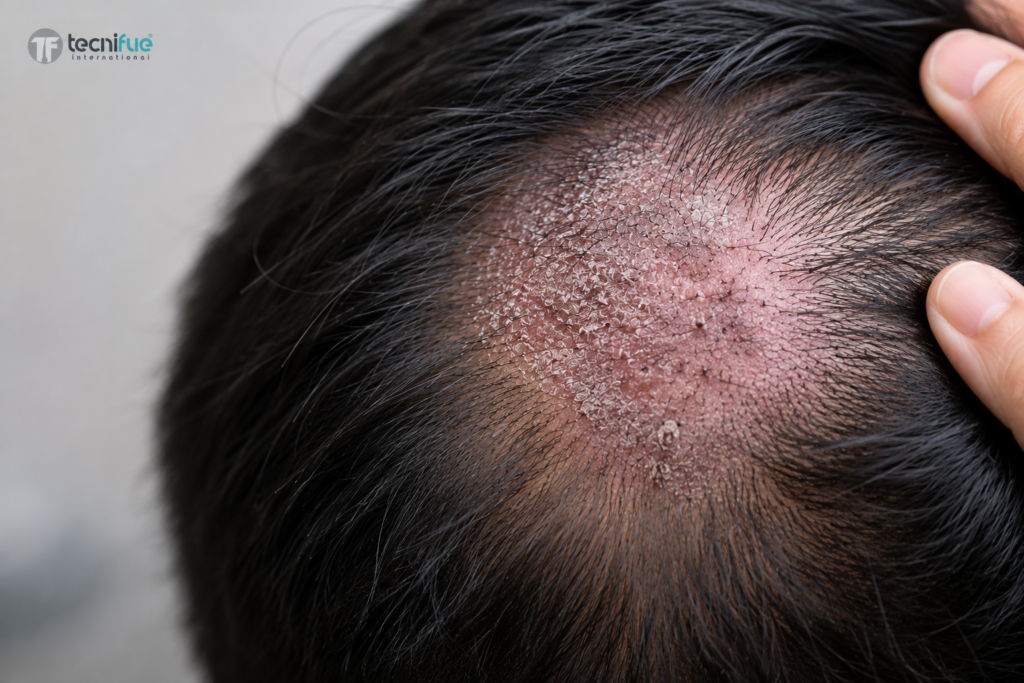
As the infection progresses, you will typically see one or more round, scaly patches where hair has broken off, sometimes with tiny black dots marking snapped hair shafts. Patches may slowly enlarge, and the skin inside them can look gray, silvery, or inflamed. Swollen lymph nodes at the back of the neck are a common accompanying sign, especially in children.
When Symptoms Signal a More Serious Infection
A painful, raised, boggy swelling that oozes pus, called a kerion, is a medical red flag that needs prompt treatment.A kerion is an intense immune reaction to fungus on scalp, and it can destroy hair follicles within weeks, leaving permanent scarred bald patches. Fever, widespread crusting, and rapidly expanding lesions also warrant an urgent dermatologist visit rather than a wait-and-see approach.
Scalp Fungus vs Other Scalp Conditions
Misdiagnosis is the single most common reason scalp fungus lingers for months. Dandruff shampoo will not touch tinea capitis, and steroid creams for presumed psoriasis can actually make a fungal infection worse by suppressing the local immune response.
Here is how the main look-alikes compare:
| Feature | Fungus on Scalp (Tinea Capitis) | Dandruff / Seborrheic Dermatitis | Scalp Psoriasis |
| Pattern | Defined round patches, often ring-shaped | Diffuse flaking across the scalp | Thick, well-demarcated plaques |
| Scale type | Gray or silvery scale with broken hairs, “black dots” | Greasy yellowish or fine white flakes | Thick silvery-white scale |
| Hair loss | Yes, patchy breakage within lesions | No true hair loss | Rare, usually temporary from scratching |
| Itch | Moderate to intense, focal | Mild to moderate, diffuse | Variable, often itchy or sore |
| Contagious? | Yes, highly | No | No |
| Other clues | Swollen neck nodes, pet or household contact | Worse with stress, oily skin | Psoriasis patches on elbows, knees, nails |
| First-line treatment | Oral antifungals + antifungal shampoo | Anti-dandruff shampoo (zinc, ketoconazole) | Topical steroids, vitamin D analogues |
Fungus vs Dandruff
The fastest way to tell the difference between dandruff and scalp fungus: dandruff flakes everywhere and never breaks hair, while fungus creates defined patches with snapped hairs inside them. Dandruff also responds within 2 to 4 weeks to over-the-counter shampoos; a fungal patch will shrug them off and keep growing.
Fungus vs Psoriasis and Seborrheic Dermatitis
Scalp psoriasis produces thick, sharply bordered silvery plaques and usually shows up elsewhere on the body, while seborrheic dermatitis causes greasy yellowish scale in oily zones like the hairline and behind the ears. Neither is contagious, and neither causes the black-dot hair breakage typical of fungus on scalp (tinea capitis). When the picture is unclear, a dermatologist can settle it in minutes with a skin scraping or a Wood’s lamp examination. Interestingly, seborrheic dermatitis does involve a yeast (Malassezia), which is why ketoconazole shampoo helps both conditions, but it behaves like an inflammatory condition rather than a true invasive infection.
Diagnosis and Medical Treatment Options
The good news: tinea capitis is very treatable, with cure rates high when the right medication is taken for the full course. The catch is that “the right medication” is almost never shampoo alone.
When to See a Dermatologist
See a dermatologist if a scaly, itchy fungus on scalp patch has not improved after 2 to 4 weeks of anti-dandruff shampoo, if you notice hair breaking or falling out within the patch, or if anything on your scalp is painful or oozing. Diagnosis is usually straightforward: a clinician examines the scalp, may use a Wood’s lamp (some Microsporum species fluoresce green), and often takes a scraping or plucked hairs for microscopy or fungal culture to confirm the species.
Confirming the diagnosis matters because treatment runs for weeks and, in the US, oral antifungals require a prescription and occasionally liver-function monitoring.
Antifungal Shampoos and Topical Treatments
An antifungal shampoo for scalp infections, typically containing ketoconazole 2% or selenium sulfide, is an essential supporting treatment, but on its own it usually cannot cure tinea capitis. The fungus lives inside the hair shaft where shampoo cannot penetrate. What shampoo does extremely well is kill surface spores, which cuts contagiousness dramatically and protects household members.
Standard use during treatment:
- Wash with a ketoconazole or selenium sulfide shampoo 2 to 3 times per week
- Leave it on the scalp for about 5 minutes before rinsing
- Household contacts often use it too, as a precaution, since asymptomatic carriage is common
Oral Antifungal Medications
Oral antifungals are the backbone of fungus on scalp treatment: griseofulvin and terbinafine are the most commonly prescribed, typically for 4 to 8 weeks depending on the fungal species. Griseofulvin has decades of track record, especially against Microsporum, while terbinafine tends to work faster against Trichophyton species. Itraconazole and fluconazole are alternatives in select cases.
Two practical points patients often miss:
- Finish the full course. Symptoms usually improve within 1 to 2 weeks, but stopping early is the top cause of relapse.
- Follow your prescribing physician’s guidance on dosing and monitoring. These medications interact with other drugs and may require baseline checks, so this is not a self-treatment situation.
Most people see visible regrowth in cleared patches within 3 to 6 months after successful treatment, provided no scarring occurred.
Home Care and Prevention Tips
Home care supports medical treatment and prevents reinfection. It does not replace prescription therapy, and the internet’s favorite remedies deserve an honest assessment.
Hygiene Practices That Reduce Risk
Preventing fungus on scalp recurrence comes down to breaking the reinfection loop: treat contacts, disinfect objects, and keep the scalp dry. After starting treatment:
1. Wash or replace combs, brushes, and hair accessories; disinfect clippers
2. Launder hats, pillowcases, towels, and bedding in hot water during the first weeks of treatment
3. Do not share headwear, towels, or grooming tools, even within the family
4. Have a vet check pets with bald or scaly patches
5. Dry hair fully before wearing caps or helmets, and air out sweaty headwear
6. Screen household members; a dermatologist may recommend antifungal shampoo for everyone at home
Natural Remedies: What Actually Helps
No scalp fungus home remedy has clinical evidence of curing tinea capitis, because nothing applied at home penetrates the hair shaft where the fungus lives. That said, some measures are reasonable as comfort care alongside real treatment:
- Tea tree oil (diluted): has laboratory antifungal activity and may ease itching, but it can irritate skin and has not been shown to cure scalp infections
- Apple cider vinegar: mildly antimicrobial in lab settings; on an infected scalp it mostly stings. It does not destroy the fungus inside hair shafts
- Coconut oil: can soften scale and reduce dryness while medication does the real work
The honest rule of thumb is that home remedies for scalp fungus manage symptoms at best. Every week spent relying on them alone is a week the infection spreads.
Why Treating Scalp Fungus Matters Before a Hair Transplant
Here is the angle most scalp fungus articles never cover, and it matters to anyone researching hair restoration: an active fungal infection on the scalp is a hard stop for transplant surgery. This is not clinic-specific caution; it is a standard surgical safety principle.
Impact on Donor and Recipient Area Health
Transplanting into or extracting from a scalp affected by fungus on scalp risks graft failure, spread of the infection into fresh wounds, and poor healing in both donor and recipient zones. A hair transplant creates thousands of micro-incisions. Each one is an open door for fungus already present on the skin, and infection during the healing window is one of the recognized causes of a failed hair transplant.
There is a second issue specific to tinea capitis: if a previous infection caused a kerion and scarred the follicles, that scarred area contains no viable grafts to harvest and needs careful assessment before it can be treated as a recipient zone. Follicle health directly determines graft survival, and graft survival determines whether your hair transplant results at 12 months look dense and natural or patchy.
Getting Scalp Clearance Before Surgery
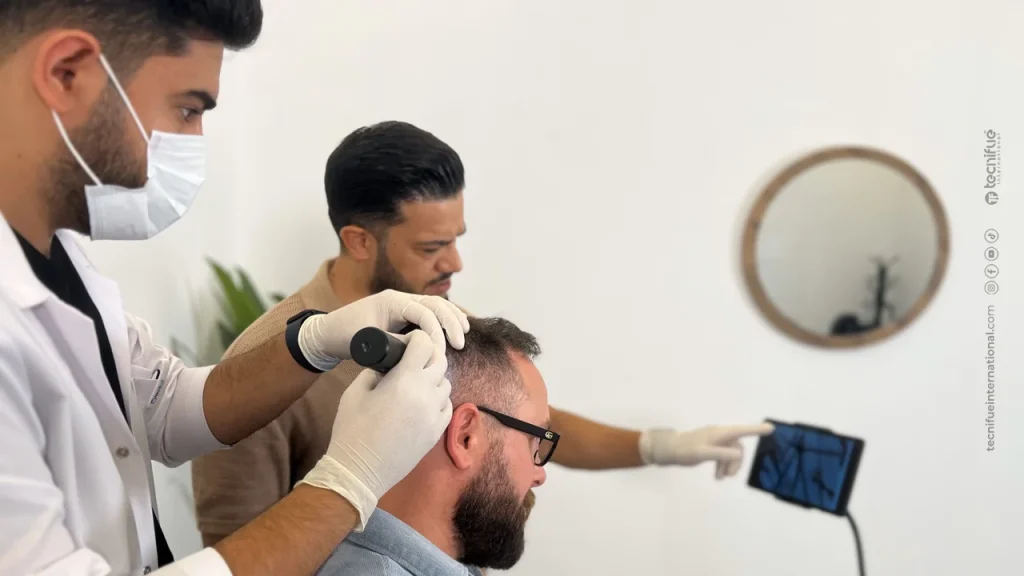
Reputable clinics require the scalp to be infection-free before surgery, typically confirmed through photo or in-person scalp assessment, and will postpone the procedure if active tinea capitis, folliculitis, or severe dermatitis is present. For international patients this is worth planning around: a 4 to 8 week antifungal course plus a confirmation check means you should resolve any scalp condition well before booking flights.
Practical pre-operative timeline for anyone with a recent scalp infection:
1. 8+ weeks before surgery: complete the full oral antifungal course prescribed by your dermatologist
2. 2 to 4 weeks before: get clinical confirmation the infection has cleared (some surgeons request a negative culture in stubborn cases)
3. During consultation: disclose the history honestly; clinics such as Tecnifue International in Istanbul review scalp photos and medical history before approving surgery dates precisely to catch issues like this early
4. After surgery: follow scalp hygiene protocols closely, since the post-operative period is when the healing skin is most vulnerable; the first ten days of FUE recovery are especially critical
One more reassurance for anyone worried a past infection ruined their candidacy: a fully healed, non-scarred scalp after tinea capitis is generally a normal transplant candidate. Even localized scarred patches can sometimes be addressed, which is a question worth raising in a proper consultation rather than assuming the worst. If you are still weighing techniques and logistics, a broader look at planning a hair transplant in Turkey covers candidacy assessment step by step.
FAQ: Fungus on Scalp
What does scalp fungus look like?
Fungus on scalp typically looks like one or more round, scaly, gray or reddish patches with broken hairs or black dots inside them, often with a slightly raised ring-like border. Severe cases can form a swollen, pus-filled lump called a kerion. If flaking is spread evenly across your whole scalp with no bald patches, dandruff is the more likely culprit.
Is scalp fungus contagious?
Yes, tinea capitis is highly contagious and spreads through direct contact and shared items like combs, hats, towels, and pillowcases, as well as from infected pets. A person remains contagious until treatment is underway; antifungal shampoo used from day one significantly reduces spread to others.
Can scalp fungus cause permanent hair loss?
Usually no, hair regrows within 3 to 6 months after successful treatment, but a severe inflammatory infection (kerion) can scar follicles and cause permanent patchy hair loss. This is the strongest argument for treating early rather than experimenting with home remedies for weeks.
How long does scalp fungus take to heal?
With oral antifungal treatment, most fungus on scalp infections clear within 4 to 8 weeks, though visible hair regrowth in affected patches takes another few months. Without proper treatment, tinea capitis can persist for many months and continue spreading to others.
*This article is for educational purposes only and does not replace personalized medical advice. If you suspect a scalp infection, consult a dermatologist or qualified healthcare provider for diagnosis and treatment.*