

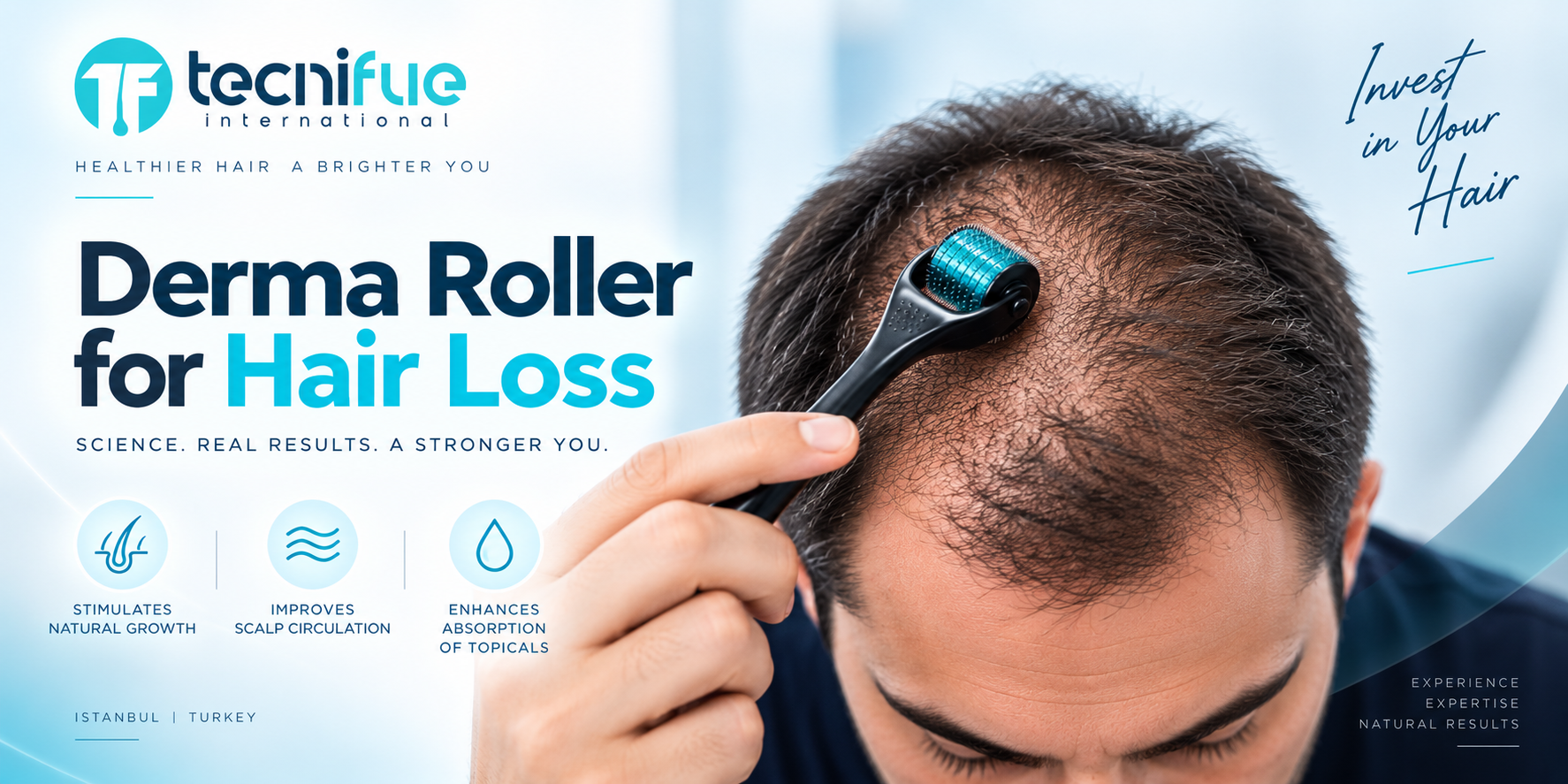

Quick Answer: A derma roller may help mild to moderate androgenetic alopecia by triggering collagen induction, boosting scalp blood flow, and improving absorption of topicals like minoxidil. Evidence is strongest when microneedling is combined with minoxidil, and weaker for alopecia areata. It is a supportive treatment, not a standalone cure for advanced hair loss.
Key Takeaways
- A derma roller for alopecia works through controlled micro-injuries that stimulate growth factors and may reactivate dormant hair follicles.
- The best-known clinical studies suggest that microneedling plus minoxidil can produce noticeably greater hair count gains than minoxidil alone over 12 weeks.
- For scalp use, most protocols use 0.5mm to 1.5mm needles, once weekly to once every two weeks.
- Results are gradual: visible improvement typically takes 8 to 12 weeks, with fuller derma roller alopecia results at 3 to 6 months.
- Evidence for alopecia areata is limited to small case reports; it should never replace dermatologist-led treatment.
- Poor hygiene or daily rolling can cause irritation, infection, and even shedding, so technique matters as much as the tool.
What Is a Derma Roller and How Does It Work for Hair Loss?
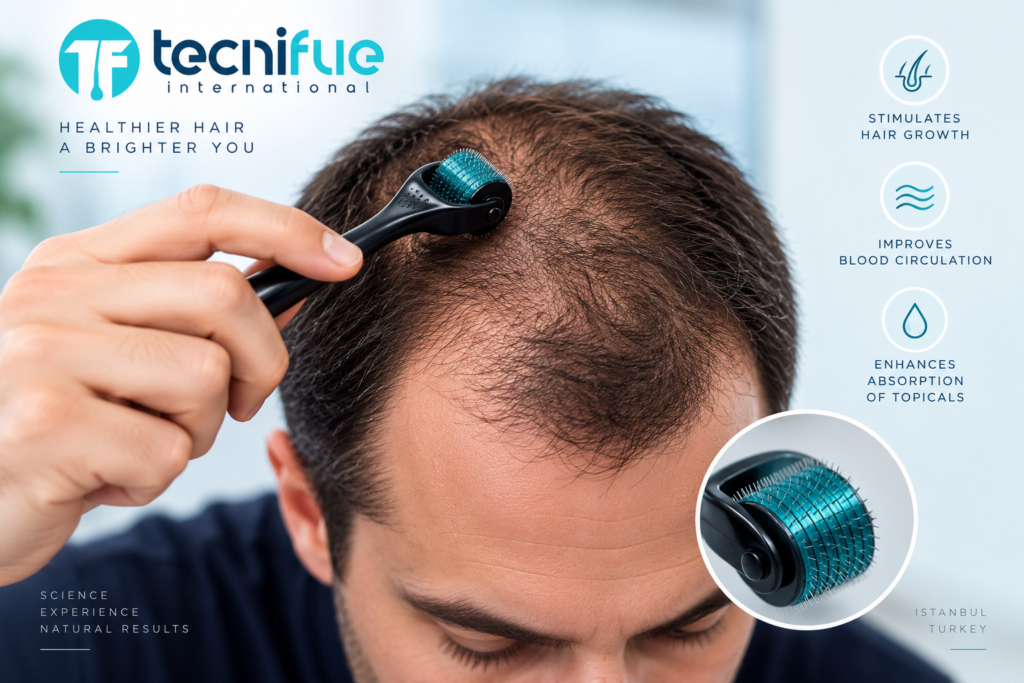
A derma roller is a handheld cylinder covered in hundreds of fine needles that create controlled micro-punctures in the scalp. These micro-injuries kick off a wound-healing cascade known as collagen induction therapy, which increases blood flow, releases growth factors, and may signal hair follicle stem cells to re-enter the growth phase.
💡 What is collagen induction therapy? A treatment that uses tiny, controlled skin punctures to trigger the body’s natural repair response, stimulating collagen production and growth factor release without damaging the skin surface.
The theory behind microneedling scalp for hair growth is simple: miniaturized follicles in thinning areas are often dormant rather than dead. The healing response, plus deeper penetration of topicals through the micro-channels, may be enough to wake some of them up. That second mechanism explains why derma rolling scalp routines are so often paired with minoxidil.
Does Derma Roller Work for Alopecia? What the Research Says
Yes, but with clear limits: the strongest evidence supports a derma roller for alopecia of the androgenetic type, used alongside minoxidil. Some studies suggest that men using weekly microneedling plus 5% minoxidil gain noticeably more new hairs per square centimeter than those using minoxidil alone after 12 weeks.
For alopecia areata, the picture is murkier. A derma roller for alopecia areata has shown promise only in small case reports, usually combined with topical steroids, and the condition’s autoimmune nature makes results unpredictable. Anyone with patchy, sudden hair loss should see a dermatologist before rolling anything across their scalp.
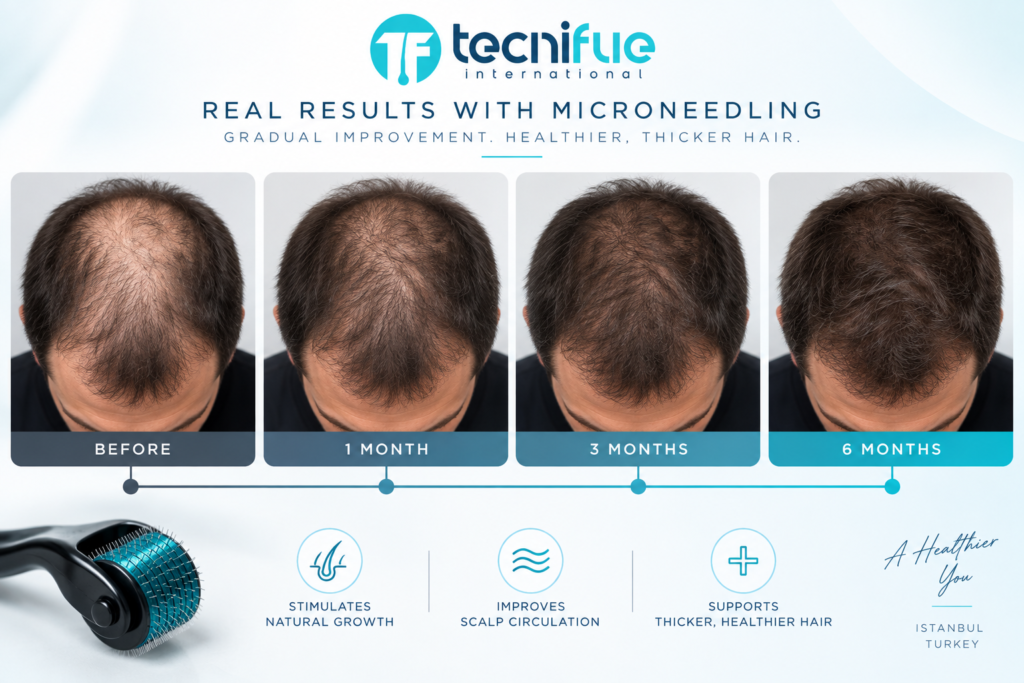
Realistic expectations matter here. Derma roller hair regrowth results look like gradual thickening of existing miniaturized hairs, not a reversal of a bald crown. Most derma roller hair loss before and after photos that show dramatic change involve early-stage thinning, consistent 3 to 6 month routines, and minoxidil in the mix.
👨⚕️ Expert Note: In clinical practice, microneedling responds best on the crown and mid-scalp where follicles are miniaturized but still present. On a shiny, fully bald area, there is typically nothing left for the treatment to stimulate.
Choosing the Right Derma Roller: Needle Size and Frequency
The best needle size for derma roller hair loss depends on where you use it and how often. This is the single decision most people get wrong: longer is not better.
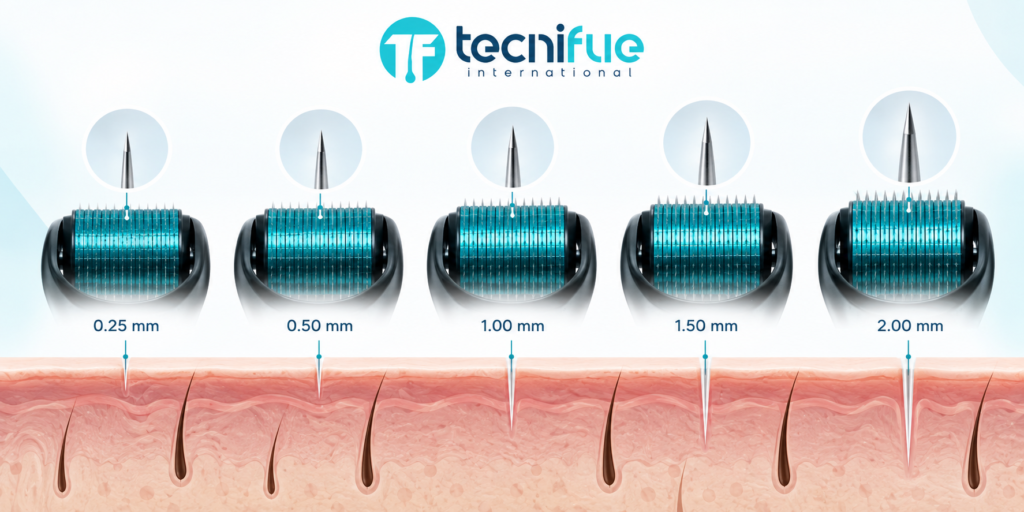
| Needle depth | Best for | Frequency | Use with minoxidil same day? |
|---|---|---|---|
| 0.25mm | Product absorption only | 2-3x per week | Yes, generally safe |
| 0.5mm | Beginners; mild thinning | 1x per week | Wait 12-24 hours |
| 1.0-1.5mm | Established thinning (closest to studied protocols) | Every 1-2 weeks | Wait 24 hours |
| 2.0mm+ | Not recommended at home | Clinic only | No |
So, is a 0.5mm derma roller effective for hair regrowth? It can support absorption and mild stimulation, but the landmark studies used depths closer to 1.5mm. A derma stamp or professional microneedling pen creates cleaner vertical punctures than a roller, which drags slightly at entry and exit, so clinic devices tend to cause less surface trauma at equal depth.
How often to use a derma roller for hair: once weekly at 0.5mm, or every 10 to 14 days at 1.0 to 1.5mm. Daily rolling does not speed results; it just prevents the scalp from completing its healing cycle. The same logic applies if you are wondering whether derma rollers work for beard growth: the mechanism is identical, but use shorter needles (0.25 to 0.5mm) on facial skin.
How to Use a Derma Roller Safely (and When to Stop)
A safe derma rolling scalp routine takes about 10 minutes and starts with disinfection, not rolling. Follow this sequence:
- Sterilize the roller in 70% isopropyl alcohol for 5-10 minutes.
- Wash your scalp and dry it; never roll over product buildup.
- Roll gently in vertical, horizontal, and diagonal directions over thinning areas, about 10-15 passes each. Mild redness is fine; bleeding means too much pressure.
- Wait 12-24 hours before applying a derma roller with minoxidil combination to avoid systemic absorption and stinging.
- Re-sterilize and store the roller dry; replace it every 8-12 weeks as needles dull.
Skip microneedling entirely if you have active scalp infections, psoriasis or eczema flares on the scalp, keloid-prone skin, or you take blood thinners. Fungal conditions are a hard stop, since rolling can spread infection; recognizing the fungus on scalp symptoms such as flaky patches, itching, and unusual redness helps you know when microneedling is off the table.
Can a derma roller cause hair loss? Temporarily, yes. Overly aggressive or too-frequent rolling can shed weakened hairs and inflame follicles. Used correctly, shedding should be minimal and short-lived.
Derma Roller vs. Other Non-Surgical Options (and Their Limits)
Microneedling sits in the middle of the non-surgical toolkit: more active than shampoos and supplements, less powerful than PRP or prescription therapy. Compared head-to-head, minoxidil alone has stronger standalone evidence, which is why the honest answer to “is dermarolling better than minoxidil?” is no; the combination beats either one by itself. A wider comparison of hair transplant alternatives shows where microneedling, PRP, laser therapy, and finasteride each fit.
There is a ceiling, though. Once follicles are gone (think slick bald areas or a mature receding hairline) no amount of rolling regrows them. At that stage, surgical restoration becomes the realistic option, and modern Sapphire FUE hair transplant techniques can restore density in areas microneedling cannot reach. Many patients spend two to three years on derma rolling and topicals before accepting that their crown had progressed beyond non-surgical help; realistic staging of expectations early on saves both time and money.
Many patients also continue microneedling on non-transplanted zones after surgery to protect native hair, typically resuming only after full healing, as outlined in the FUE recovery timeline.
FAQs About Derma Roller for Alopecia
How long does it take to see results from a derma roller?
Most users notice reduced shedding and slight thickening around 8-12 weeks, with clearer microneedling hair loss before and after differences at 3-6 months. Anything sold as a 30-day fix is marketing, not biology.
Is it safe to use a derma roller every day?
No. The scalp needs 5-14 days (depending on needle depth) to complete its healing cycle. Daily rolling causes chronic inflammation and can worsen shedding.
Does derma rolling work without minoxidil?
It can produce modest improvement alone, but every strong clinical result pairs microneedling with minoxidil or another topical. If you cannot use minoxidil, microneedling is still worth trying for mild androgenetic alopecia, with lower expectations.
Is microneedling safe for alopecia areata?
Only under dermatologist supervision. Alopecia areata is autoimmune, and aggressive stimulation of an inflamed scalp can theoretically worsen some cases. Small studies pairing microneedling with topical steroids are encouraging but far from conclusive.
Which derma roller size is best for hair regrowth?
For results closest to published research, 1.0-1.5mm used every 1-2 weeks. Beginners should start at 0.5mm weekly and progress only if the scalp tolerates it well.
This article is for educational purposes and does not replace personalized medical advice. Consult a dermatologist before starting scalp microneedling, especially for sudden or patchy hair loss. Last reviewed in 2026.