


FUE hair transplant recovery follows a predictable path built around four stages: Day 1, Days 2 to 5, Days 6 to 9, and Day 10. The first 10 days are the critical window; after that, grafts are secure and new hair regrows over the following months.
FUE Hair Transplant Recovery: Quick Answer
The critical part of FUE hair transplant recovery lasts 10 days, ending when the scabs are washed off and the grafts can no longer be dislodged. This guide draws on years of experience guiding international patients through this exact timeline at our hair restoration Clinic in Istanbul, Turkey.
How long does FUE recovery take?
The scalp’s critical recovery takes 10 days, but full cosmetic recovery takes roughly 12 to 18 months as transplanted follicles shed, rest, and regrow into their final density.
Day-by-day recovery timeline at a glance
| Stage | What your scalp does | Key action |
|---|---|---|
| Day 1 | White dots around grafts, mild burning | Sleep on your back, do not touch your head |
| Days 2–5 | Dots turn to dark scabs, forehead swelling | Daily gentle wash, wear the band 4 days |
| Days 6–9 | Scabs harden, discomfort fades | Apply foam, remove the band |
| Day 10 | Scabs washed off, grafts secure | Circular rubbing to lift scabs |
| Weeks 3–8 | Shock loss (shedding) | Normal, stay patient |
| Months 4–18 | New hair grows and thickens | Final result |
FUE Hair Transplant Recovery Time & Timeline
Recovery splits into two parts: an intense 10-day surface-healing phase and a longer growth phase running past a year. The month-by-month growth stages are mapped in our full FUE hair transplant timeline. For a broader overview, see FUE Hair Transplant: Costs, Procedure, & Benefits Explained.
The first 10 days vs. the full recovery period
The first 10 days protect the grafts; the full recovery period grows them. Scabs and swelling resolve within 10 days, while visible new hair usually starts around month 4.
What the recovery timeline looks like week by week
By the end of week 1 scabs fall away; weeks 2 to 8 often bring shock loss; months 4 to 12 deliver steady regrowth.
Shock loss is the temporary shedding of transplanted hairs a few weeks after surgery; the follicle survives and pushes out a fresh hair within months.
Day-by-Day FUE Recovery
Here is what each stage of the critical 10-day window looks and feels like. This timeline applies to FUE Hair Transplant procedures and, with minor differences, to DHI hair transplants.
Day 1: the day of your transplant and first night
Day 1 covers the procedure and the first night, not a full day of healing. You’ll see small white dots in the recipient zone, which are the skin tissue around each follicle and a sign of correct extraction. The donor area is covered with a sterile bandage after antimicrobial cream. That first night brings mild burning; painkillers handle it, and you must avoid hitting your head because the grafts are still loose.
Days 2 to 5
The white dots turn into dark scabs, a healthy sign of healing. The bandage is removed and the first wash is performed the next day. Never rub the recipient zone, but gently massage the donor area to boost blood flow. Forehead swelling (edema) may appear; lying down and the black band keep it under control. Foam applications usually begin around the fifth wash to soften scabs.
Days 6 to 9
By Day 6 the scabs harden and discomfort drops to a minimum. The band is no longer needed and swelling should be gone. Keep applying foam to prepare the scabs for the final wash.
Day 10: the big day
Day 10 is when you wash the scabs off and free the grafts. Apply foam twice, 10 minutes apart, then rub in circular motions in the shower until every scab lifts. Larger scabs from bigger blood clots may need until Day 12 or 13 and extra care. Once the scabs are gone, the grafts are secure and you can return to your normal sleeping position.
A common mistake is skipping daily washing out of fear; clean, gently washed grafts heal faster than untouched ones.
Donor Area Recovery After FUE
The donor area, where grafts are extracted, heals faster than the recipient zone, usually settling within 7 to 10 days.
How the donor area heals
Tiny extraction points scab and close within days, and the area is safe to gently massage and wash from day two. Unlike the recipient zone, stimulating blood flow here actively supports recovery.
What is normal vs. when to worry
Mild redness, tightness, and numbness across the donor area are normal for one to two weeks. Contact your clinic if you notice spreading redness, pus, severe pain, or fever, which can signal infection.
FUE Recovery Tips: How to Speed Up Healing
You speed up FUE hair transplant recovery through smart sleep positioning, hydration, gentle washing, and avoiding anything that disturbs the grafts. Each step is expanded in our full hair transplant aftercare routine.
Sleeping, swelling and daily activity
Sleep on your back with your head slightly elevated for the first 10 days to cut swelling. Drink plenty of water, press edema to the sides while lying down, and skip strenuous exercise for about two weeks.
Washing your hair in the first days
Wash daily with an organic or baby shampoo and never rub the recipient zone. Dab dry with a paper towel instead of scrubbing. Washing your hair after a hair transplant usually starts with gentle rinses a few days after the procedure, and you can return to your normal routine within about two weeks once the grafts have securely settled.
What to avoid during recovery
Avoid direct sun, heavy sweat, alcohol, smoking, tight hats, and scratching for the first two weeks. Hold off on your first haircut after a hair transplant until your surgeon clears the donor area.
FUE Hair Transplant Recovery Photos (Day 1 to Day 10)
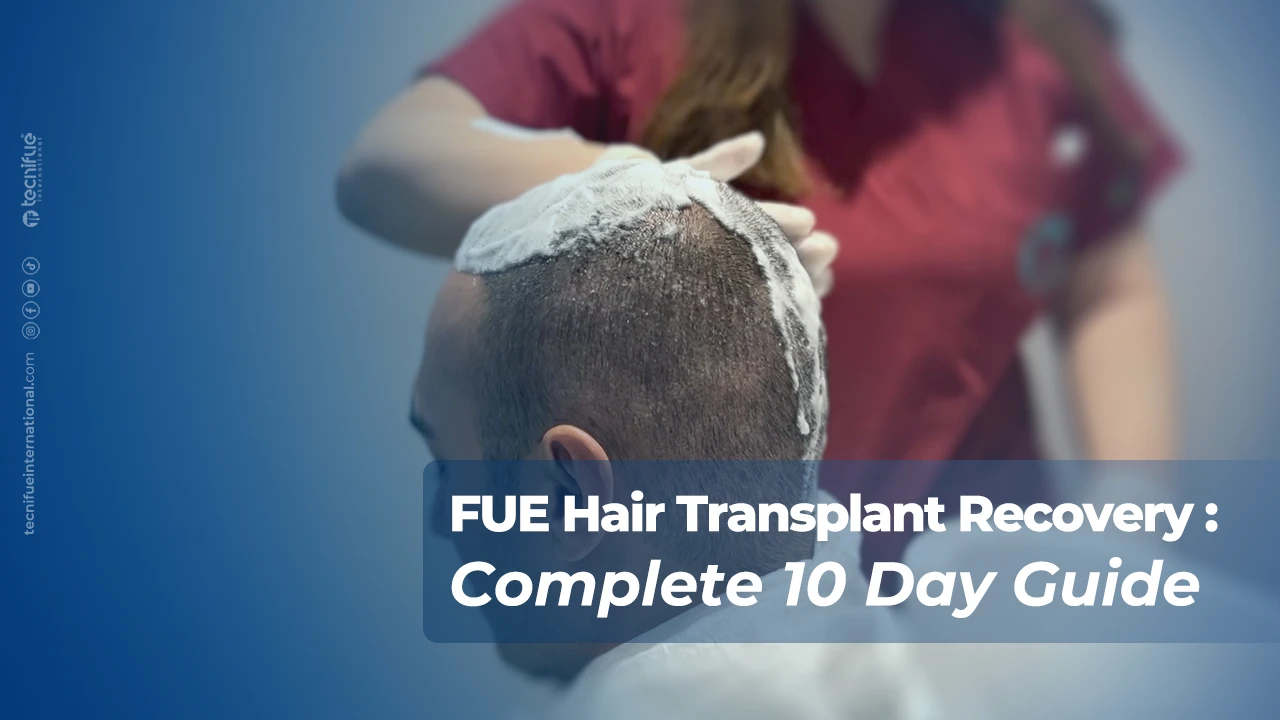
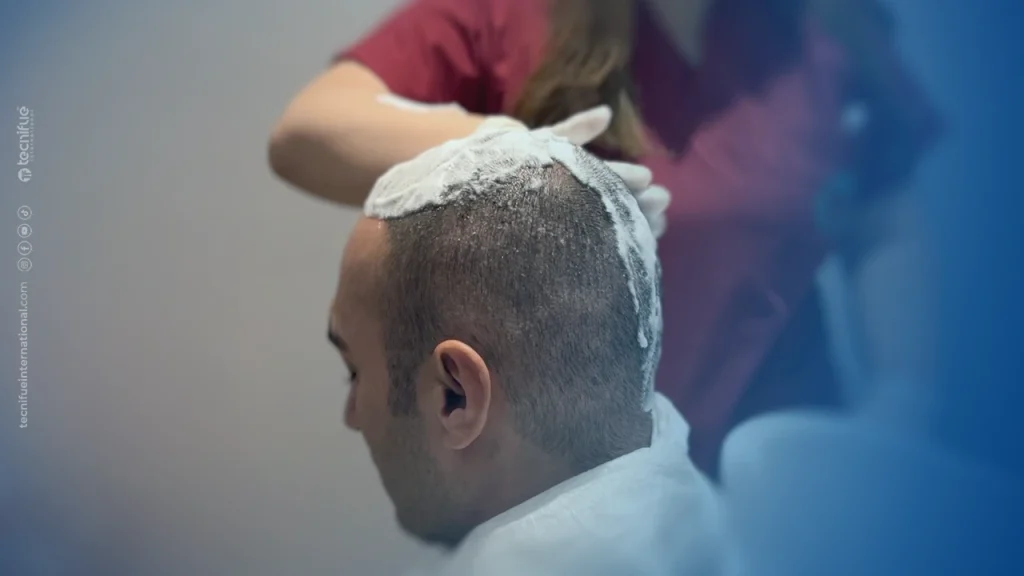
Real recovery photos show white graft dots on Day 1, dark scabs by Day 5, hardened scabs around Day 8, and a clean scalp after the Day 10 wash. The image at the top of this guide shows a typical Day 10 recipient zone once the scabs are removed.
Frequently Asked Questions
What does the donor area look like during recovery?
The donor area shows pinpoint scabs and mild redness across the extraction zone. These fade within 7 to 10 days and are covered as the surrounding hair grows.
When can I wash my hair normally after a FUE hair transplant?
You can return to normal, unrestricted washing after Day 10, once the scabs are removed and the grafts are secure. Before that, only the gentle protocol is safe.
When can I return to work and exercise after FUE?
Most patients return to desk work within 3 to 5 days and to full exercise after about 2 weeks. Heavy sweating and strain risk dislodging grafts early on.
What happens 20 years after a hair transplant?
Transplanted follicles are genetically resistant to balding, so 20 years later they typically keep growing. Native hair around them can still thin with age, which is why long-term planning matters.
Tags: recovery day by day, recovery process, recovery tips, recovery stages, recovery after fue