Quick Answer: Androgenetic alopecia is hereditary pattern hair loss caused by the hormone DHT (dihydrotestosterone) gradually shrinking genetically sensitive hair follicles. It affects a large share of both men and women, with prevalence rising with age. It cannot be fully cured, but treatments like minoxidil, finasteride, and hair transplantation can slow, stop, or visibly reverse thinning.
Key Takeaways
Androgenetic alopecia is the most common cause of hair loss worldwide, driven by genetics and androgens, not stress or shampoo.
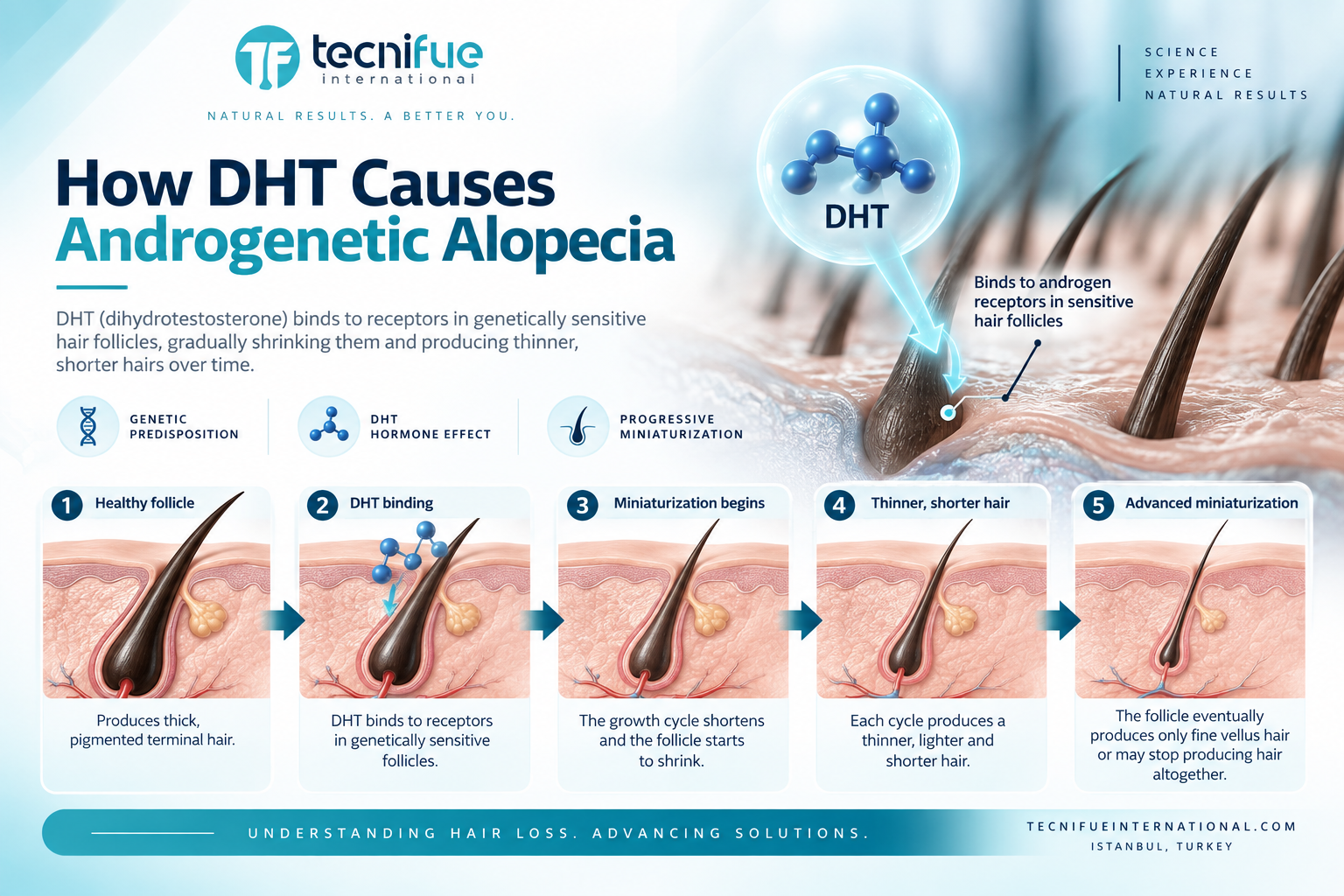
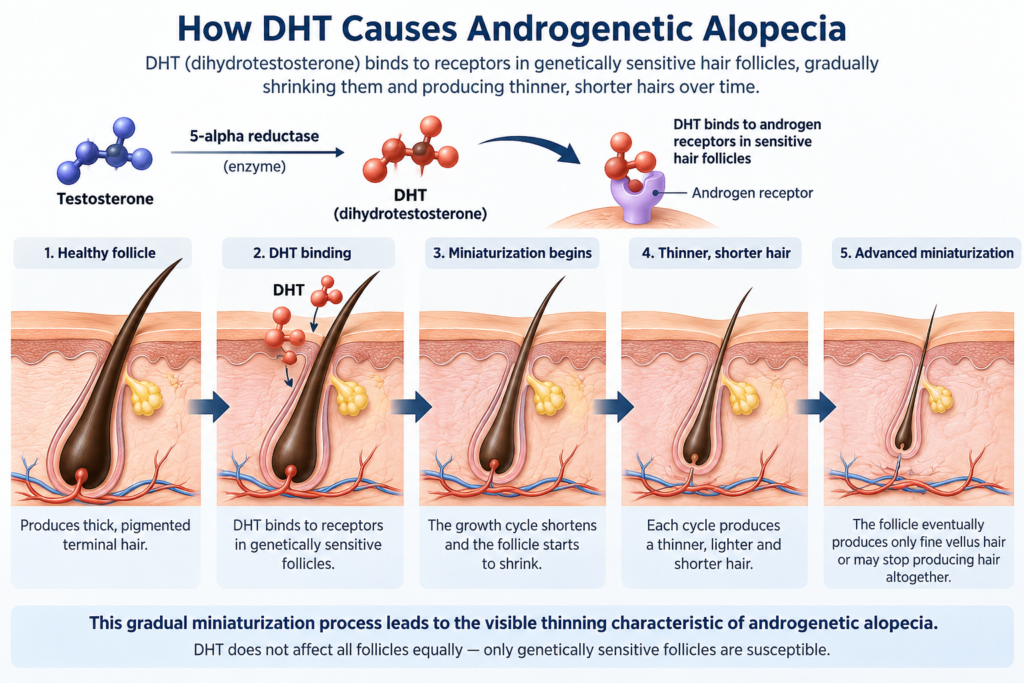
The enzyme 5-alpha reductase converts testosterone into DHT, which triggers hair follicle miniaturization in sensitive follicles.
Men typically lose hair at the temples and crown; androgenetic alopecia in females usually shows as diffuse thinning with a preserved hairline.
Early treatment matters: miniaturized follicles can recover, but follicles that have fully stopped producing hair generally cannot.
In 2026, the main options are topical minoxidil, oral finasteride, low-level laser therapy, PRP, and FUE/DHI hair transplantation.
What Is Androgenetic Alopecia?
Androgenetic alopecia (also called androgenic hair loss or pattern baldness) is a hereditary condition in which hair follicles progressively shrink under the influence of androgens, the group of hormones that includes testosterone. It affects a very large number of men and women, and prevalence increases with age.
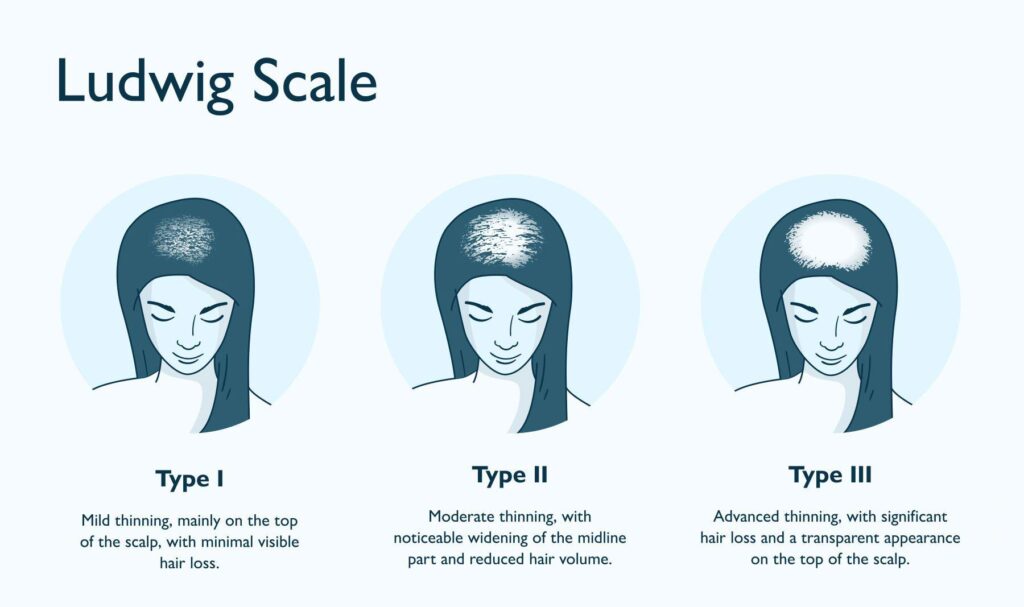
The link between androgen and hair loss follows two distinct patterns. Men usually develop a receding hairline and crown thinning, mapped on the Norwood scale. Androgenetic alopecia in females, often graded on the Ludwig scale, appears as widening of the central part while the front hairline stays largely intact. Female pattern hair loss rarely leads to complete baldness.
How Do DHT and 5-Alpha Reductase Cause Hair Loss?
The root cause is a chain reaction: the enzyme 5-alpha reductase converts testosterone into DHT dihydrotestosterone, a hormone that binds more strongly to receptors in hair follicles. In people who inherit androgen-sensitive follicles, DHT progressively shortens the hair growth cycle.
💡 What is hair follicle miniaturization? Each growth cycle, the affected follicle produces a thinner, shorter, lighter hair, until it eventually produces only invisible vellus fuzz or nothing at all.
This explains a common confusion: androgens and hair loss are linked through follicle sensitivity, not hormone levels. Most balding men have normal testosterone. Their follicles simply respond more strongly to DHT, a trait inherited from either parent, not only the mother’s side as the old myth claims.
Early Signs and Symptoms
Catching hair loss androgenetic alopecia early gives you the widest treatment window. Watch for these signals:
In men: gradual temple recession forming an “M” shape, a thinning crown visible under bright light, and a widening gap between the hairline and eyebrows.
In women: a wider center part, a thinner ponytail, and more scalp showing at the top of the head.
In both: miniaturized hairs (short, wispy strands among normal ones) and slow, symmetrical progression over years rather than sudden shedding.
Sudden patchy loss usually points to a different condition, such as alopecia areata or a scalp infection like fungal disease, so a professional evaluation is worth the visit.
How Is Androgenetic Alopecia Diagnosed?
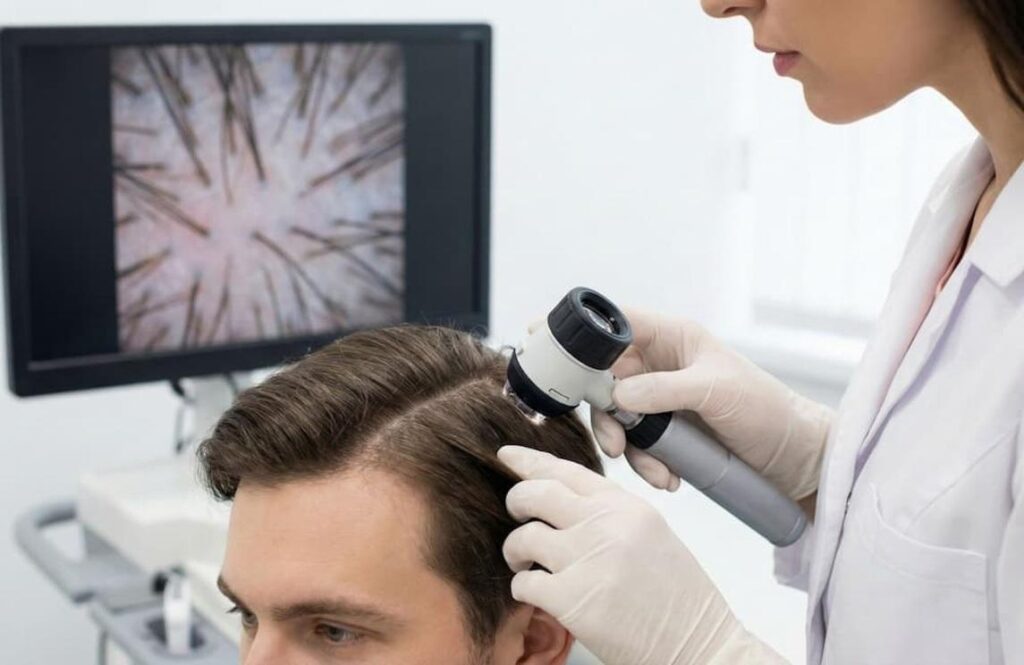
Diagnosis is typically clinical and takes one visit. A dermatologist or hair specialist looks at the pattern of loss, family history, and two key tests. Trichoscopy (magnified digital imaging of the scalp) reveals hair shaft diameter variability, the hallmark of miniaturization. The pull test, gently tugging a small bundle of hairs, helps rule out active shedding disorders like telogen effluvium. Blood work may be added for women to exclude thyroid issues or iron deficiency.
Treatment Options in 2026
There is no single cure, but combining approaches gives measurably better outcomes than any one alone. Treatments fall into two groups: medical management that protects existing hair, and surgical restoration that relocates DHT-resistant follicles.
Option
How it works
Best for
Commitment
Minoxidil (topical/oral)
Extends growth phase, boosts follicle blood flow
Early to moderate thinning, men and women
Daily, ongoing
Finasteride
Blocks 5-alpha reductase, lowers scalp DHT
Men; prescription only
Daily, ongoing
Low-level laser / PRP
Stimulates follicle activity
Adjunct to medication
Repeated sessions
Hair transplant (FUE/DHI)
Moves DHT-resistant donor follicles
Stabilized, more advanced loss
One-time procedure plus recovery
Finasteride is prescription medication; follow your prescribing physician’s guidance, and note it is generally not used in women of childbearing age. Any dose, drug choice, or combination must be determined by a qualified physician based on your individual situation.
For advanced patterns, surgery is the only way to restore density in fully bald zones. Modern Sapphire FUE hair transplant techniques extract individual DHT-resistant follicles from the back of the scalp and implant them with fine sapphire blades, which is why transplanted hair keeps growing even as native hair thins. Outcomes for more advanced Norwood stages depend heavily on donor supply, and ongoing medication is usually advised to protect surrounding native hair.
Uzman Notu: The most common mistake specialists see is waiting until loss is advanced before acting. Medication preserves what you have; surgery replaces what is gone. Patients who combine both, starting early, consistently get the most natural long-term results.
For implantation without a fully shaved scalp or for denser packing in the hairline zone, the DHI hair transplant technique uses implanter pens for more controlled angle and depth.
Can Androgenetic Alopecia Be Reversed or Slowed?
It can be slowed and partially reversed, with limits. Follicles that are miniaturized but still active can regrow thicker hair with consistent treatment; clinical studies indicate that most men maintain or improve hair counts on standard medication over multiple years. Follicles that have been dormant for many years generally do not respond, which is where transplantation steps in.
Two realistic expectations help: results take 3-6 months to become visible with medication, and stopping treatment means gradual return of loss within about a year. Androgenetic alopecia does tend to progress with age, but the rate varies widely between individuals.
Frequently Asked Questions
What does androgenetic mean?
“Androgenetic” combines “androgen” (male-type hormones present in all sexes) and “genetic” (inherited). It describes hair loss caused by an inherited sensitivity of hair follicles to androgens, primarily DHT.
How long does it take to see results from treatment?
With medical treatment, visible changes typically appear after 3-6 months of consistent use, since the hair growth cycle takes time to respond. Progress is usually tracked with periodic photos and scalp imaging.
Is androgenic hair loss the same in men and women?
The mechanism (DHT and follicle sensitivity) is the same, but the pattern differs: men recede at the temples and crown, women thin diffusely on top. Treatment protocols also differ, since finasteride is generally restricted to men.
Does hair transplant surgery fix the cause of androgenetic alopecia?
No. It relocates DHT-resistant follicles into thinning zones, so transplanted hair is permanent, but native hair around it can keep thinning without medical support.
When should I see a specialist about hair loss?
If you notice gradual thinning, a widening part, or receding temples that continue over several months, an earlier evaluation gives you more treatment options. Sudden patchy or heavy shedding should also be assessed promptly.
This article is for educational purposes only and does not replace personalized medical advice. Consult a dermatologist or hair restoration specialist for diagnosis and treatment planning.
Altay David, membre de la direction et responsable médical chez Tecnifue International, s'est consacré à aider personnellement des milliers de patients tout au long de leur expérience de greffe de cheveux en Turquie. Grâce à son expertise, il est reconnu dans le domaine de la restauration capillaire et demeure un conseiller de confiance pour offrir des recommandations sur mesure, adaptées à chaque patient.